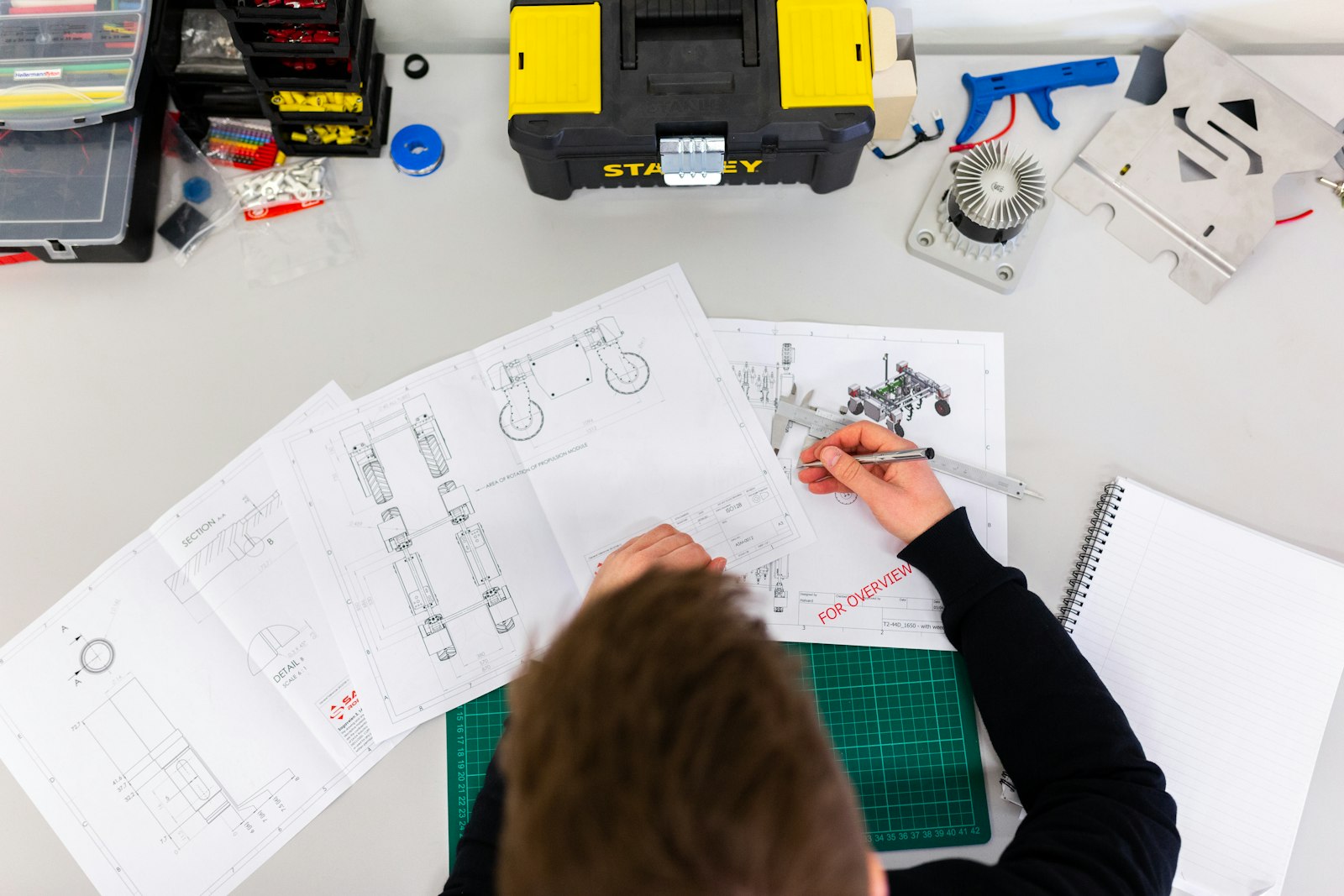
The assumption that a university degree is the automatic next step after KCSE leaves a lot of good options unexamined. Kenya's technical and vocational education and training (TVET) system — national polytechnics, technical and vocational colleges, and vocational training centres — turns out graduates in trades and technical fields the economy is actively short of, often in less time and at a fraction of the cost of a degree.
This isn't an argument that one path is better than the other. It's an argument for comparing them properly: how long each takes, what each actually costs once funding is accounted for, what kind of work each leads to, and how easily you can move from one to the other later if you change your mind.
Both routes run through KUCCPS
The same placement service that handles degree admission also places KCSE candidates into TVET diploma, craft certificate and artisan programmes. You apply on one portal, in one window, and you can list TVET programmes alongside — or instead of — degree choices. Entry requirements are lower for the technical route: a diploma typically asks for a mean grade around C- (minus), a craft certificate around D+ (plus) or D plain, and artisan courses lower still, though exact cut-offs vary by course and institution and are set each cycle. Check the current requirements for the specific programme on the KUCCPS portal rather than assuming.
TVET institutions also admit students directly, outside KUCCPS placement, especially for intakes that run more than once a year. That flexibility is one of the practical advantages of the technical route — you are not locked to a single annual placement round.
Time and cost, compared honestly
An artisan course runs months to about a year; a craft certificate around two years; a diploma two to three. A bachelor's degree is four years for most programmes and five to six for engineering, architecture and medicine. Every extra year is another year of fees, accommodation and living costs, and a year later into earning.
Tuition at a public TVET college is modest, and the government pays a capitation subsidy per trainee that brings the published fee down further. A degree at a public university costs more even for a funded student, and considerably more at a private one. The technical route is not automatically cheaper once you account for the tools, materials and attachment costs some trades carry — but for most students, over the full programme, it is.
Where a TVET qualification competes well
In fields where employers hire on demonstrable skill — electrical installation, plumbing, welding and fabrication, motor vehicle mechatronics, building and construction trades, plant operation, ICT support and networking, food and beverage, fashion and design, hairdressing and beauty, agriculture — a diploma holder with a solid portfolio and a completed attachment often reaches paid work faster than a degree holder in a crowded field. Many of these trades also lend themselves to self-employment, which a degree does not automatically.
A degree still matters where the job or the professional body requires one: to register as a professional engineer, to practise at the higher clinical levels, to enter most graduate trainee schemes, to teach at secondary level and above, or to move onto management tracks in large organisations. If your target career names a degree as the entry point, the technical route becomes a stepping stone rather than a substitute.
"Pick the route by where you want to be in five years and how you learn best — not by which one carries more prestige at the dinner table."
Funding on the technical route
Funded TVET trainees benefit from the government capitation, and HELB runs a loan and bursary product for TVET students that works much like the university loan — you apply on the HELB portal, funds go partly to the institution and partly to you for upkeep, and repayment begins after you finish and start earning. County and NG-CDF bursaries fund TVET students too. The sources are much the same as the university route; the amounts and the base fee are smaller.
You can move up later
A diploma is not a dead end. A relevant diploma with a good pass can earn credit transfer into a degree programme, sometimes straight into second or third year. Certificate holders can progress to diploma, then higher diploma or degree. If you are unsure about committing four years and the fees up front, starting technical and progressing is a legitimate strategy — the companion guide on diploma-to-degree progression covers how the credit transfer actually works.
Questions to ask a technical institute before you enrol
Is the institution registered with the TVET Authority (TVETA), and is this specific programme accredited? Who examines and certifies it — KNEC, CDACC, or a foreign awarding body? Does it have the workshops, equipment and consumables the course actually needs, or will thirty trainees share one machine? Does it place trainees for industrial attachment, and where? What do recent graduates of this exact course do now? A good college answers these readily; hesitation is information.
Whichever way you lean, verify the programme's accreditation and the current entry and funding rules on the official portals — TVETA, KUCCPS and HELB — in the year you apply. The structures are stable in outline, but the numbers move every cycle.